
Guides
How automatic doors work, what tempered glass costs, when to repair versus replace — every answer written by the team that installs and fixes these systems daily.
Automatic Door Repair & Maintenance
View service →Automatic Door Repair vs Replacement — Which Is Worth It
Repair or replace your automatic door? Weigh age, condition, parts availability and downtime to decide. Honest advice from GW GeWalt.
How Often Should Automatic Doors Be Serviced?
Most automatic doors should be serviced every 6-12 months, more in high-traffic sites. See what servicing covers and why it pays off.
What to Expect From an Automatic Door Service Visit
What happens during an automatic door service visit: on-site diagnosis, what technicians check, typical timeline and transparent pricing.
Why Is My Automatic Door Making Noise?
A noisy automatic door usually means worn rollers, a loose belt or a motor issue. Learn the causes and when repair or replacement is needed.
Why Is My Automatic Sliding Door Not Opening?
Automatic door not opening? Common causes are sensor faults, power loss, track debris and motor issues. Quick checks and when to call GW GeWalt.
Why Won't My Automatic Door Sensor Respond?
Automatic door sensor not responding? Check alignment, obstructions, wiring and controller reset — then call for a professional diagnosis.
Automatic Sliding Doors
View service →Are Automatic Sliding Doors Safe? (Anti-Clamp & Backup Battery)
Automatic sliding doors are safe with anti-clamp technology, safety sensors and a backup battery. See the safeguards on every GW GeWalt system.
Automatic vs Semi-Automatic Sliding Doors — Which to Choose
Full-automatic or telescopic? Compare cost, opening width and entrance fit to choose the right sliding door for your space.
How Does an Automatic Sliding Door Work?
How an automatic sliding door works: sensor, motor, belt and track explained, plus the BLDC motor and safety features behind a silent slide.
How Long Do Automatic Sliding Door Motors Last?
A quality BLDC automatic door motor runs for many years and millions of cycles. See how duty cycle and maintenance affect lifespan.
How Much Does an Automatic Sliding Door Cost in Malaysia?
Automatic sliding doors in Malaysia start from around RM2,000 (telescopic from RM1,700). See the cost factors and how to get an exact quote.
What Sensors Do Automatic Sliding Doors Use? (Infrared vs Microwave)
Microwave sensors trigger opening; infrared beams prevent clamping. Learn how each automatic door sensor works and which you need.
Automatic Swing Doors
View service →Automatic Swing Door vs Sliding Door for Your Entrance
Swing or sliding automation? Compare space, traffic, cost and aesthetics to pick the right automatic door for your entrance.
How Do Automatic Swing Door Operators Work?
Automatic swing door operators use self-adapting, constant-speed control and sensor triggers to open and close smoothly. Here's how.
Where Are Automatic Swing Doors Best Used?
Automatic swing doors suit offices, clinics, retail and accessibility entrances where a slide won't fit. See the best-fit settings.
Door Hardware & Accessories
View service →Glass Door Clamps, Patch Fittings and Spider Fittings Explained
Clamps, patch fittings and spider fittings mount glass differently. Learn what each does, where it's used and how it handles load.
How to Choose the Right Hydraulic Door Closer
Choosing a hydraulic door closer: match closer size to door weight and traffic, set backcheck and latching speed. A practical guide.
What Is a Floor Spring and How Does It Work?
A floor spring is a hydraulic hinge set into the floor that controls how a heavy glass door swings and closes. Here's how it works.
Emergency Breakout (Escape Route) Doors
View service →Do You Need Emergency Breakout Doors for Your Building?
Find out if your building needs emergency breakout doors: building-type triggers, occupancy thresholds and when to consult a certified installer.
UBBL Escape-Route Requirements for Automatic Doors
How UBBL egress rules apply to automatic doors: breakout requirements, BOMBA expectations and what a compliant escape-route door must do.
Floor Spring & Hinge Repair
View service →Glass Railings & Balconies
View service →Are Glass Balcony Railings Safe? (Safety Glass Standards)
Glass balcony railings are safe with the right safety glass, thickness and fixings. See MS 1498 standards and how railings stay secure.
Choosing Glass for Balcony Railings and Curtains
How to choose glass for balcony railings and glass curtains: thickness, framing, weather exposure and budget. Custom fabrication by GW GeWalt.
Frameless vs Framed Glass Railings
Frameless or framed glass railings? Compare looks, cost, maintenance and fixing to choose the right balustrade.
Hermetic / Hospital Doors
View service →Choosing Hermetic Doors for Hospitals and Laboratories
Specifying hermetic doors for hospitals and labs: cleanroom class, sizing and compliance. Government-certified supply and install from GW GeWalt.
How Hermetic Doors Maintain Cleanroom & Air-Lock Seals
Hermetic doors use gasket sealing and air-lock interlocking to control contamination and pressure in cleanrooms and hospitals.
Maglev Sliding Doors
View service →Maglev vs Conventional Automatic Sliding Doors
Compare maglev and belt-driven automatic sliding doors on noise, maintenance, longevity and cost to decide which suits your space.
What Is a Magnetic Levitation (Maglev) Sliding Door?
A maglev sliding door glides on a magnetic-levitation drive with no rollers — near-silent, wear-free and premium. Here's how it works.
Roller & Track Replacement
View service →Repair or Replace Worn Sliding Door Tracks
Should you repair or replace a worn sliding door track? Weigh damage extent, cost and longevity to decide when replacement is smarter.
Signs Your Sliding Door Rollers Need Replacing
Sticking, jumping or grinding sliding doors usually mean worn rollers. Learn the early signs and whether to DIY or call a pro.
Why Is My Sliding Door Dragging on the Floor?
A sliding door dragging on the floor usually means worn rollers, a misaligned track or frame sag. See the causes and repair options.
Semi-Automatic (Telescopic) Sliding Doors
View service →How Telescopic Sliding Doors Work for Narrow Entrances
Telescopic sliding doors overlap panels on parallel tracks to open wide in narrow entrances. See how the mechanism gains width.
When to Choose a Telescopic Sliding Door
Choose telescopic when your entrance is narrow but needs a wide opening. See width thresholds, cost trade-offs and a quick checklist.
Shower & Folding Glass Doors
View service →Folding vs Sliding Glass Doors for Tight Spaces
Folding or sliding glass doors for tight spaces? Compare clearance, cost, maintenance and looks to pick the right system.
How to Choose Shower Sliding and Folding Glass Doors
Choosing a shower glass door: sliding vs folding, glass thickness and waterproof hardware. A quick guide from GW GeWalt.
Tempered Glass Doors
View service →Frosted vs Transparent Tempered Glass Doors
Frosted or transparent tempered glass? Compare privacy, light, maintenance and looks to choose the right finish for your door.
How Much Does a Tempered Glass Door Cost in Malaysia?
Tempered glass doors in Malaysia start from around RM2,000. See the cost drivers and how to get an exact quote from GW GeWalt.
How Strong Is Tempered Glass? (MS 1498 Safety Standard)
Tempered glass is up to 5x stronger than annealed and complies with MS 1498. See its impact resistance and shatter-safe behaviour.
How Thick Should a Tempered Glass Door Be? (10/12/15mm)
Which tempered glass door thickness do you need? Compare 10mm, 12mm and 15mm by door size, weight and hardware.
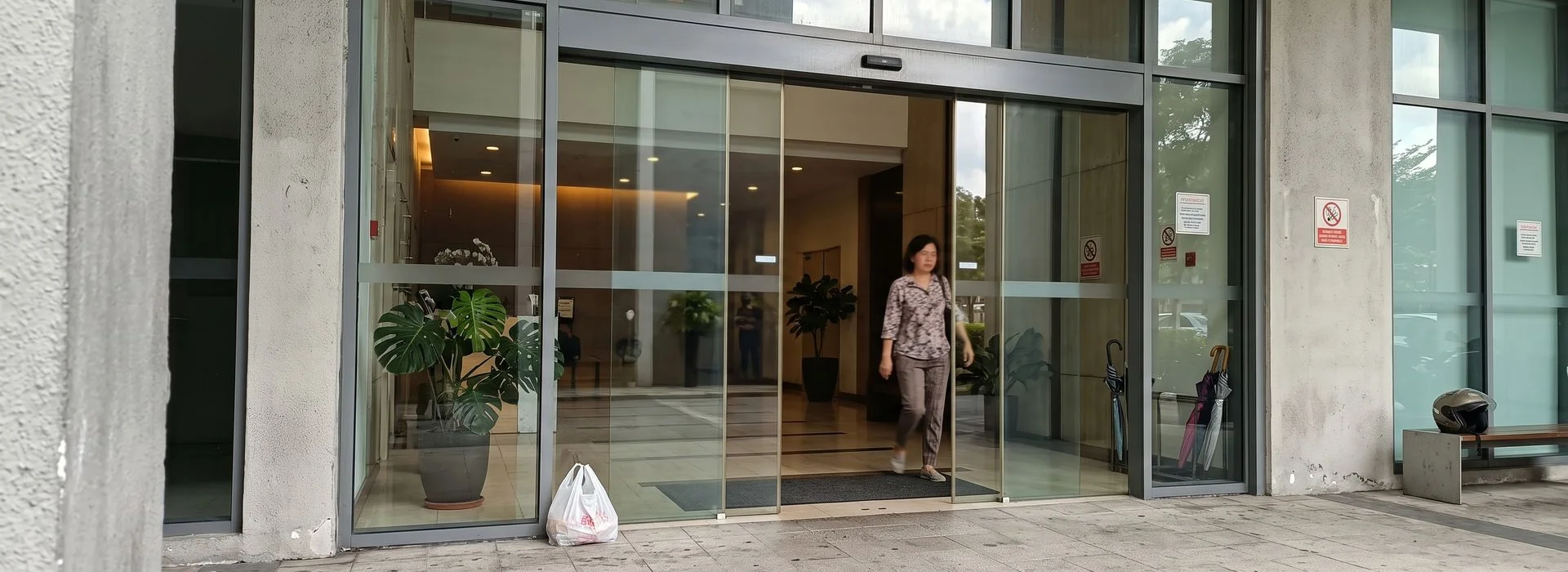
Tempered Glass vs Laminated Glass — Which Is Safer
Tempered or laminated glass? Compare break behaviour, the PVB interlayer and best-use cases to pick the right safety glass.
What Is Tempered Glass and How Is It Made?
Tempered glass is heat-treated to be up to 5x stronger than annealed glass and shatters into blunt pieces. Learn how thermal toughening works.
Ready for an Entrance Transformation?
Get a professional engineering assessment of your entrance. We analyse weight loads, traffic flow and safety requirements before quoting.