
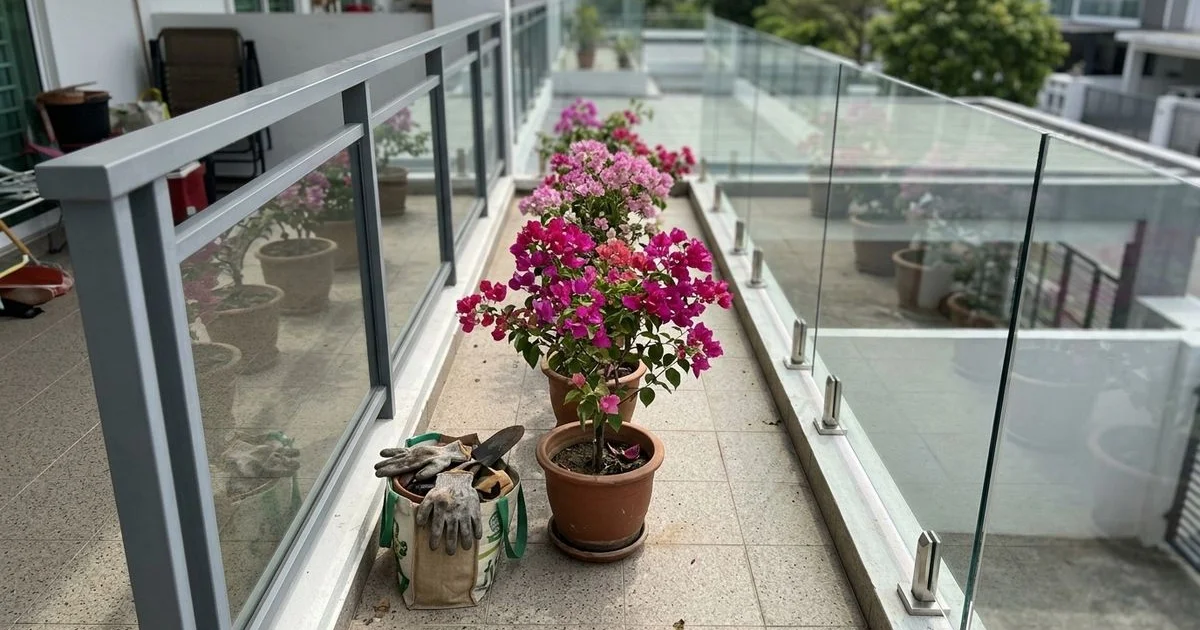
The Same Railing, Two Philosophies
Every glass balustrade holds people back from an edge; the difference is what carries the load. Framed systems support the glass in a metal structure — posts, top rail, sometimes full perimeter frames — so the metal does the structural work. Frameless systems make the glass itself the structure, anchored only at its base or through discreet point fixings.
That single difference drives everything buyers compare: looks, cost, cleaning and engineering. Both are legitimate builds within our glass railings and balconies work; the right one depends on your site and priorities.
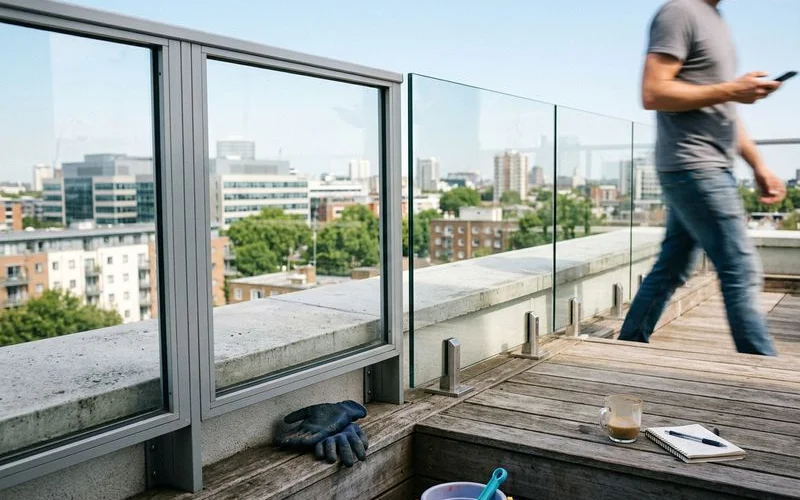
Side by Side
| Factor | Frameless | Framed |
|---|---|---|
| Look | Uninterrupted glass, minimal hardware | Defined edges, visible top rail |
| Cost | Higher — thicker glass, rated fixings | Lower — frame shares the load |
| Cleaning | One-pass wipe-down | More edges and junctions |
| Glass thickness | Typically 12mm+ | Can run thinner, frame-supported |
| Feel | Open, view-first | Solid, hand-rail reassurance |
Aesthetics is frameless territory. Uninterrupted panels on standoffs or a base channel disappear into the view, which is the whole point on a high-rise balcony or a designer staircase. Framed railings read as a deliberate architectural line — some projects want exactly that, and a continuous top rail gives hands something to hold.
Cost favours framed. When the frame carries the load, the glass can be thinner and the fixings simpler. Frameless shifts all structural duty into thicker panels and precision-rated clamps, standoffs or channels — premium parts, premium install.
Maintenance splits on geometry: frameless surfaces wipe clean in a single pass, while frames add corners where dust and mould find a home in Malaysian humidity.
Exposure deserves a thought
On high, wind-exposed balconies, a framed system’s top rail adds stiffness and a reassuring grab line. Frameless works at height too — it simply demands more from the glass and fixings, which the specification must reflect.
Choosing for Your Project
Let the space vote first: view-first balconies and contemporary interiors lean frameless; budget-conscious runs, long terraces and projects wanting a visible rail lean framed. Then let the structure vote: what the fixings can anchor into sometimes settles the debate before taste does.
Whichever way you lean, the safety baseline is identical — MS 1498 safety glass sized to the span, on load-rated fixings anchored to structure. See the systems we install on our glass balcony and glass railing pages, or send us photos of your edge and we will quote both options side by side.