
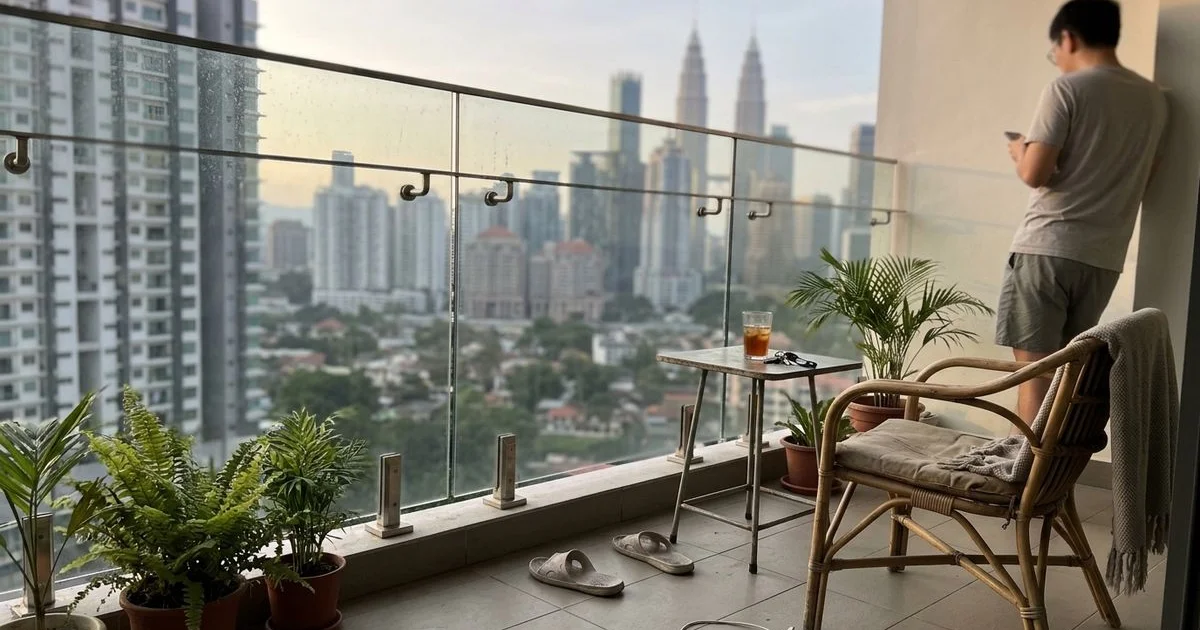
The Worry Is Reasonable — The Physics Is Reassuring
Standing behind a sheet of glass ten floors up, the question asks itself. The honest answer: glass balcony railings are safe when three things are specified correctly — the glass type, the thickness, and the fixings. Every element of a properly built glass railing or balcony is engineered around the load of a person falling against it.
The failures that make the news trace back to shortcuts: annealed glass where safety glass belonged, under-sized panels, or fixings anchored into tile instead of structure. None of those are inherent to glass railings; all of them are avoidable specification errors.
What “Correctly Specified” Actually Means
The right glass. Balustrades use tempered or laminated-tempered safety glass compliant with MS 1498. Tempered panels are up to five times stronger than ordinary glass; laminated-tempered adds a PVB interlayer that holds fragments in place even after breakage — the preferred behaviour where the railing is the only barrier over a drop. Both are stocked; we specify which one your edge needs when we quote. See our tempered glass range.
The right thickness. Panel thickness follows span and load, not habit. Longer unsupported runs and taller panels need thicker glass; 12mm is a common balustrade baseline, stepping up where spans demand.
The right fixings. The glass is only as safe as what holds it. Clamps, stainless steel standoffs and base channels are each rated for balustrade loads, and they must anchor into the structural slab — never into screed or tiles. Which fixing family you end up with also follows the style decision our frameless vs framed glass railings guide walks through.
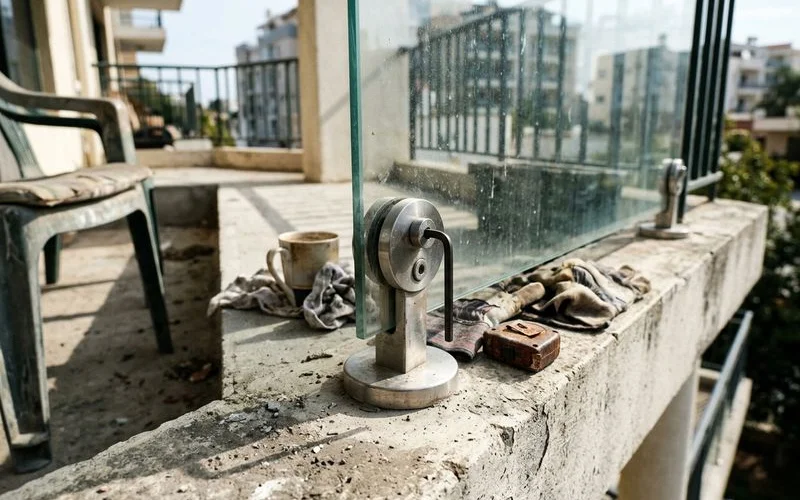
The tile test
If a railing quote doesn’t mention what the fixings anchor into, ask. Fixings that stop at the floor finish rather than the concrete beneath it are the single most common defect we find on badly installed balustrades.
Questions That Separate Good Installers From Cheap Ones
Three questions expose a railing quotation quickly: What glass construction and thickness, and why that thickness for my span? What are the fixings rated for, and what do they anchor into? Is the glass certified to MS 1498?
A specialist answers all three in a sentence each. Vagueness on any of them is your cue to keep shopping — the material savings on an under-specified railing are trivial next to what the railing exists to prevent.
Every balustrade we build is measured on-site (RM50, deductible on order), fabricated from MS 1498 safety glass sized to its span, and fixed with hardware rated for the job. If a specific balcony or staircase is on your mind, send us photos and dimensions — we will tell you exactly what it needs.