
The 5x Claim, Explained Honestly
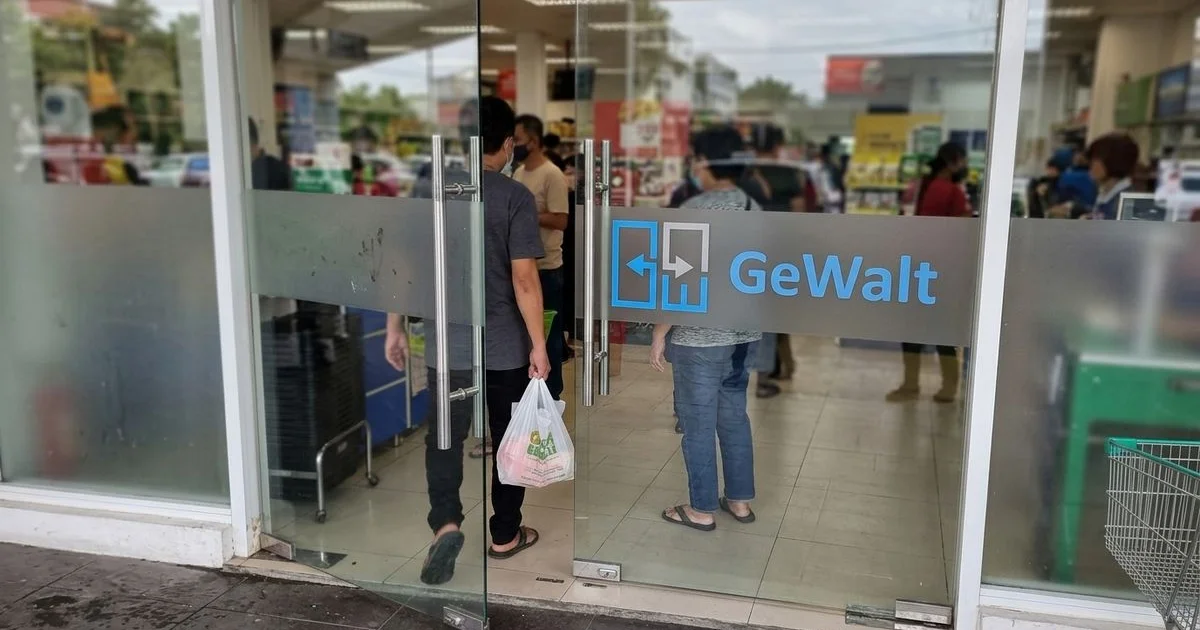
“Up to five times stronger than normal glass” sounds like marketing until you see where the number comes from. Tempering locks the surfaces of a glass panel in permanent compression. Since glass fails from surface cracks, any impact must first cancel that built-in compressive stress before it can even begin to break the panel. Measured against annealed glass of the same thickness, that pre-stress multiplies resistance to impact and bending several times over — up to 5x on the surfaces where doors take their hits.
For a door, the practical meaning is simple: trolley strikes, wind slams, kicked-open closings and the daily abuse of a busy entrance land on a panel engineered to shrug them off. It is why every one of our tempered glass doors uses toughened panels as standard.
Strength Is Half the Story — The Break Is the Other Half
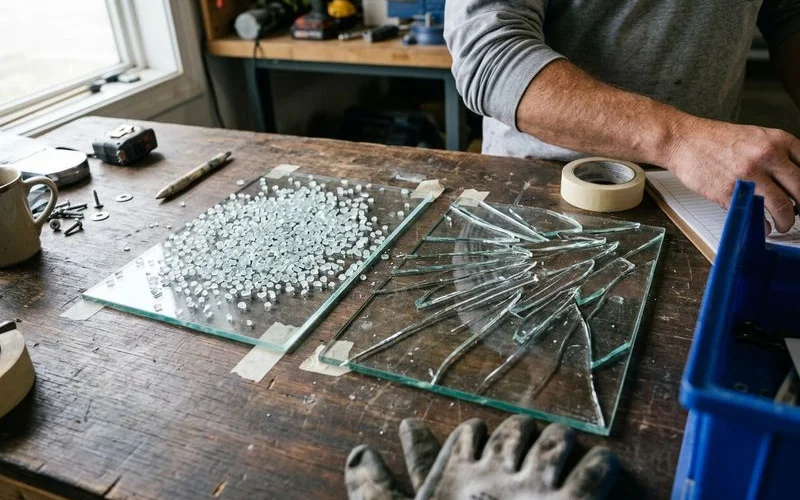
Annealed glass fails dangerously: long, heavy, dagger-edged shards that cause the serious injuries glass doors are notorious for. Tempered glass cannot fail that way. When the compressive skin is finally breached, the tensioned core releases its stored energy through the entire panel at once, and the whole sheet crumbles into small blunt granules.
That is the counterintuitive bargain of tempered glass: it resists breaking far longer, and when it does break, it breaks completely — into the safest possible fragments.
Total shattering is a feature
Owners are sometimes alarmed that a tempered panel “exploded” rather than cracked. That all-at-once granule failure is precisely the designed behaviour: no hanging shards, no jagged edge left standing in a doorway.
What MS 1498 Actually Certifies
MS 1498 is Malaysia’s safety-glass standard. In practice it certifies the two behaviours above: the panel must withstand defined impact tests, and when broken it must fragment into granules small and numerous enough to be counted as safe. Compliance is verified by fragment-count testing — a broken sample must produce a minimum number of particles within a measured area, proving no large shards can form.
For buyers, the standard is the shortcut question: ask whether the glass is MS 1498-compliant safety glass. It separates genuine toughened panels from “heat-strengthened” or plain annealed glass sold on look-alike pricing.
One boundary worth knowing: tempered granules fall from the frame when the panel breaks. Where fragments must stay in place — balustrades over drops, overhead glazing — laminated or laminated-tempered constructions enter the picture, which our tempered vs laminated guide compares directly.
Every panel we fabricate — doors, partitions, railings, shower screens — is tempered to MS 1498 in 10mm, 12mm or 15mm. If strength or safety is the question holding up your project, send us the details and we will answer it with specifications, not adjectives.