
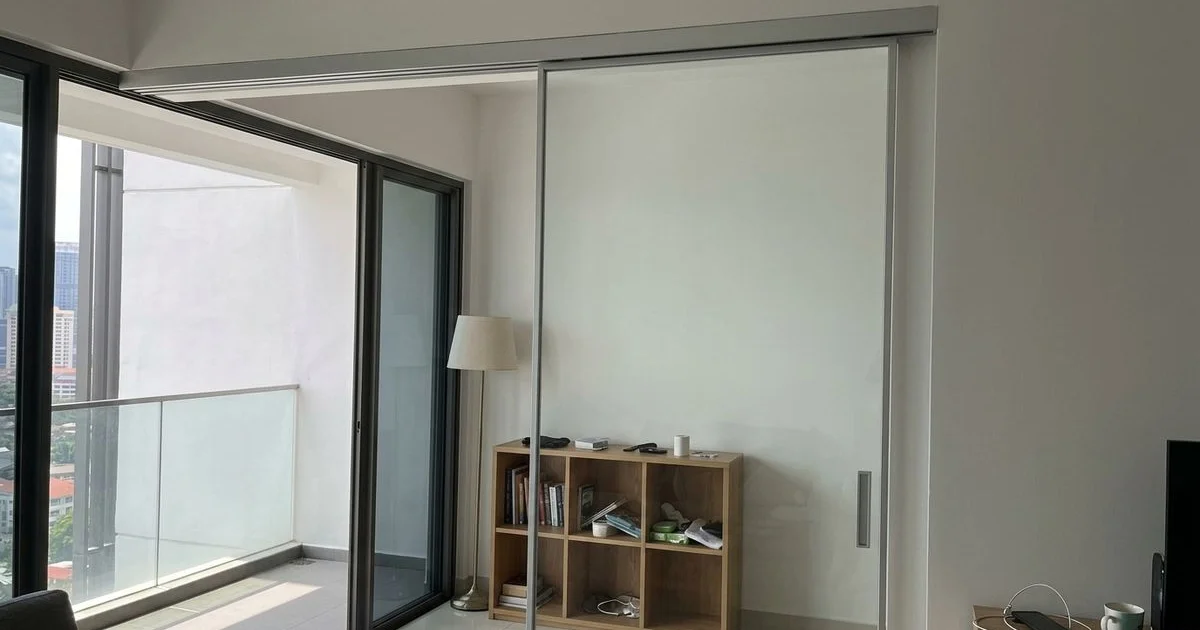
Levitation Instead of Rolling
A maglev sliding door replaces the rollers of a conventional slider with a magnetic-levitation drive. Permanent magnets in the header rail suspend the door leaf so it floats with no physical contact, and a magnetic drive system moves it along the rail. Nothing rolls, nothing rubs, nothing grinds.
That single change rewrites the door’s character. Conventional sliding doors — even excellent ones — carry their full leaf weight on small roller bearings that click and hum against a track on every cycle, wearing steadily until they need replacement. Maglev sliding doors have no such contact point, which is where both the silence and the durability come from.
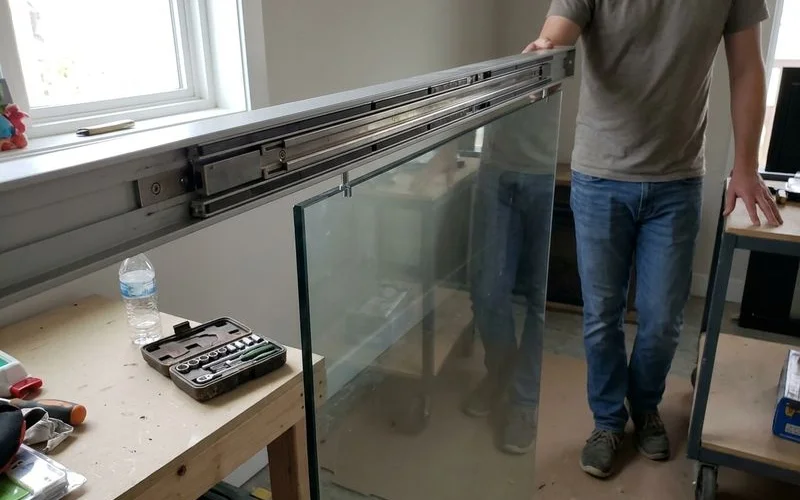
What Contactless Actually Buys You
Near-silence. The dominant noise sources of a sliding door are roller contact and drive vibration. Remove the contact and the leaf moves with little more than air displacement — quiet enough for bedrooms, studios and hotel suites where a normal door’s rumble would intrude.
Wear-free operation. Bearings and rollers are the standard wear items of every conventional slider; they are also the parts whose failure makes doors drag and motors strain. Maglev has none, so its service life is not written by roller fatigue.
Minimal maintenance. With no wear parts in the drive path, upkeep drops to occasional rail cleaning and alignment checks — a fraction of a conventional door’s servicing needs.
Where the acoustic difference is most audible
Night-time use. A conventional slider that seems quiet in daytime background noise becomes clearly audible at 2am. Maglev doors stay imperceptible, which is why bedrooms and suites are their natural home.
Where Maglev Belongs — And Where It Doesn’t
Maglev sits at the premium end of the market, and that positioning is honest. The technology suits high-end residential interiors, boutique hotels, studios and prestige commercial spaces where quietness, refinement and clean minimal headers justify the spend.
It is not the tool for a mall entrance or a factory corridor; those high-traffic, heavy-leaf jobs belong to our conventional 4S automatic systems with their 200kg-rated BLDC motors. The full trade-off — noise, maintenance, longevity, cost — is laid out in our maglev vs conventional comparison.
Because leaf size, glass and finish vary so much at this end of the market, maglev systems are quoted per project. Send us your opening dimensions and the look you want, and we will confirm feasibility and price — starting, as always, with an RM50 measurement that comes off your order.