
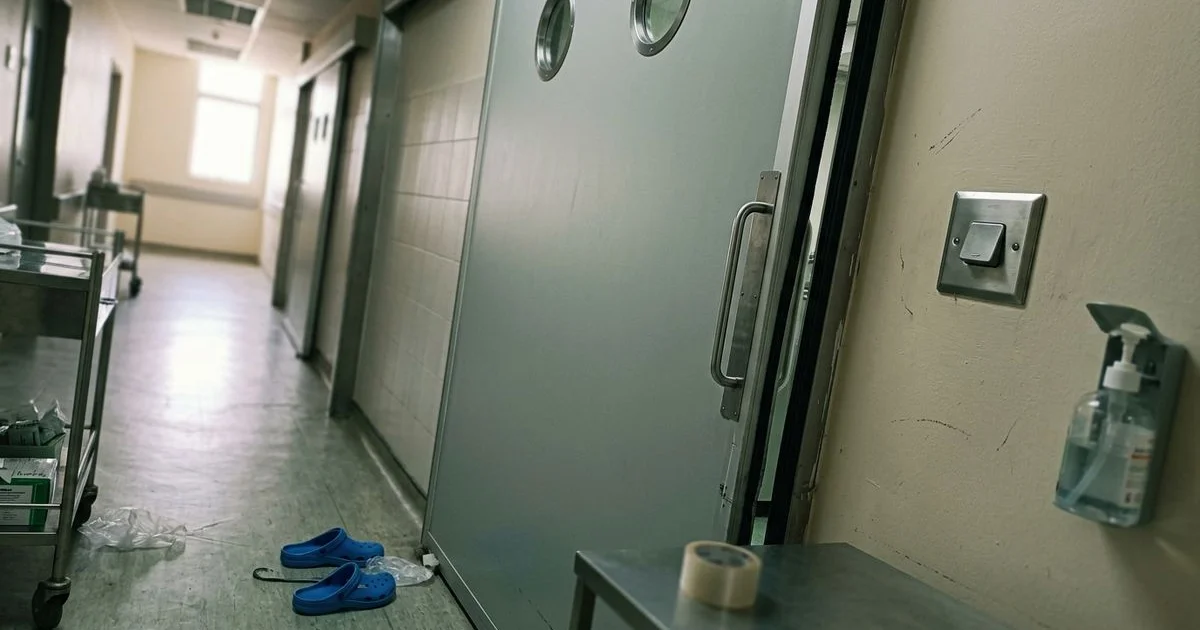
Airtight Is a Mechanism, Not a Promise
Any door can claim a close fit. A hermetic door achieves something different: when the leaf reaches its closed position, a drive mechanism presses it against the frame so a compressible gasket seals the entire perimeter — top, sides and threshold — airtight. On sliding hermetic doors, the leaf typically moves in two motions: sliding across the opening, then sealing inward against the frame.
That final sealing motion is what separates hermetic hospital doors from ordinary sliders. Without it, air leaks around every edge; with it, the doorway becomes part of the room’s pressure envelope.
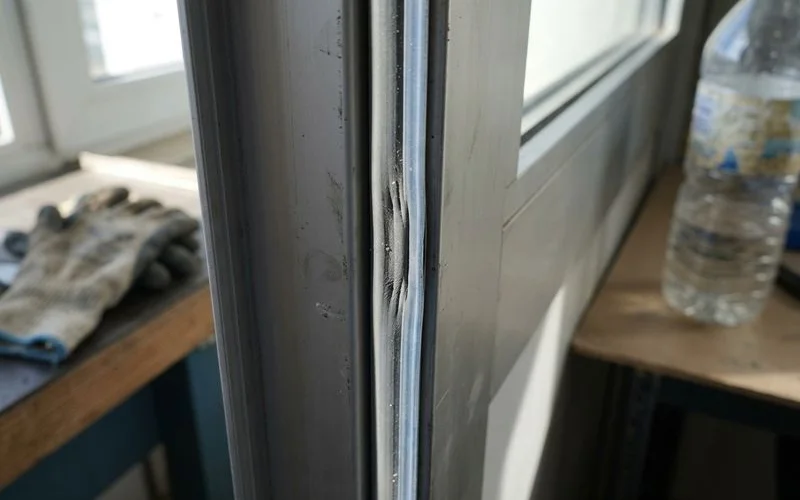
Why Rooms Need Sealing at All
Hospitals and laboratories run rooms at deliberate pressure differentials. An operating theatre is kept at positive pressure so air flows outward, carrying particles away from the sterile field. An isolation room runs negative, pulling air inward so pathogens cannot escape. Cleanrooms hold their classification by controlling exactly what air enters and leaves.
Every leaky doorway fights that design. A gap of a few millimetres moves enough air to disturb the differential, and with the air travel particles, microbes and unfiltered contamination. Hermetic sealing removes the doorway from the leak calculation.
The threshold is the hard part
Walls seal easily; floors are where seals fail. Quality hermetic doors use drop-down or compression threshold seals that engage only on closing — airtight when shut, no dragging gasket when the leaf moves.
Air-Lock Interlocking: Sealing in Sequence
Between zones of different cleanliness, a single door — however well sealed — dumps one zone’s air into the other every time it opens. The answer is an air lock: a small chamber between two hermetic doors that are electronically interlocked so both can never open at once.
A person enters through door one, which closes and seals behind them. Only then will door two release. The chamber’s air, not the clean zone’s, is what gets exchanged. Pharmaceutical plants, laboratories and theatre suites all rely on this sequencing, and the interlock logic is part of what we commission on every installation.
Panel construction completes the system: flush, joint-free faces in cleanable materials, because a seal is pointless if the door itself harbours contamination.
If you are specifying doors for a medical or laboratory project, our guide on choosing hermetic doors covers cleanroom classes and configuration choices — or send us your drawings directly. As a certified installer for government and high-security buildings, we quote hermetic systems per project, with commissioning that tests seals and interlocks against your pressure regime.