
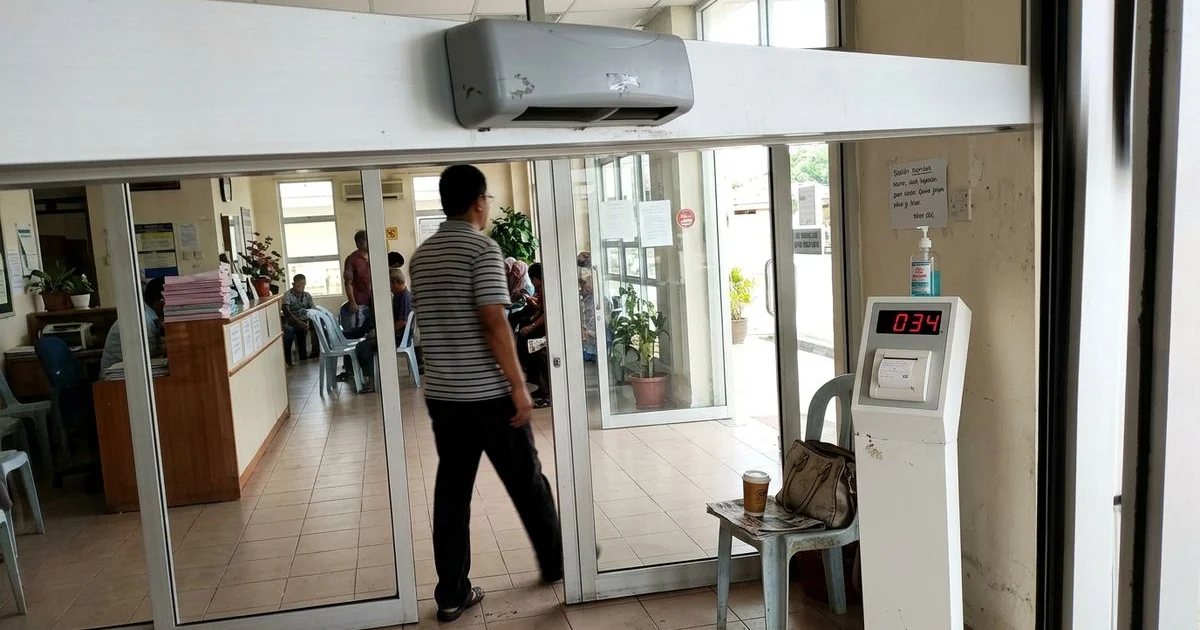
Two Sensors, Two Different Jobs
Every quality automatic door runs at least two sensor types, and they do completely different jobs. Confusing them is the most common mistake we hear when owners describe a fault, so it is worth getting the split clear before you specify or troubleshoot anything on automatic sliding door systems.
The microwave motion sensor is the activation sensor. Mounted above the door and angled outward, it emits a microwave field and reads the reflections; when a person moves through the field, the door opens. Microwave sensing detects motion at useful range, works day and night, and can be tuned for direction so the door ignores people walking past parallel to the entrance.
The infrared safety beam is the protection sensor. It watches the threshold itself — the space the leaves actually close through. While anyone or anything occupies that zone, the sensor holds the door open and vetoes the closing cycle entirely.
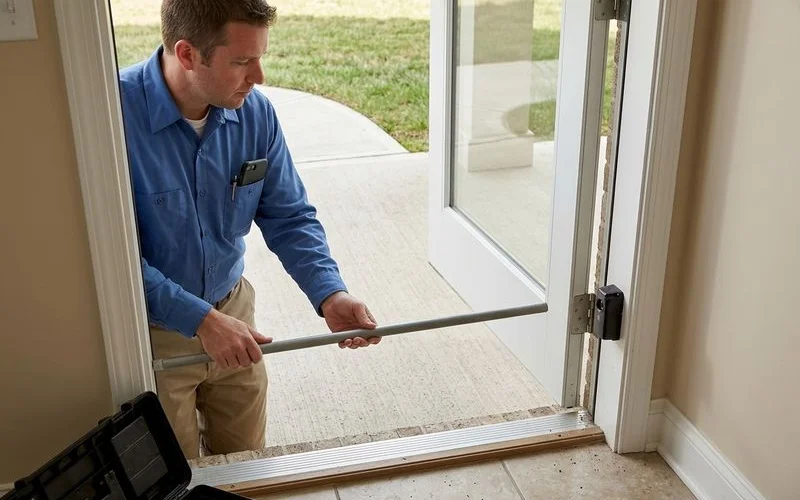
Activation vs Safety: Why Both Are Non-Negotiable
A door with only an activation sensor is a hazard: it opens for approaching traffic but has no idea whether someone slow — an elderly visitor, a wheelchair user, a delivery trolley — is still standing between the leaves when the close timer runs out. The infrared presence sensor closes that gap, and anti-clamp force monitoring in the controller backs it up as the last line of defence.
A quick self-test for your existing door
Stand still in the middle of the open doorway for fifteen seconds. A healthy door stays open the whole time. If it tries to close on you, the presence sensor is misaligned, dirty or failed — book a service before it catches someone.
The two sensors also fail differently. Activation faults show up as a door that will not open or opens for nobody; safety-beam faults show up as a door that closes too eagerly. Describing which behaviour you see helps a technician arrive with the right part. Our guide on door safety features covers what the full protective stack looks like.
Touchless and Special-Purpose Options
Beyond the standard pair, several activation options suit specific premises:
- Wave switches — hold a hand near the plate and the door opens, no contact
- Foot sensors — kick-to-open activation for staff carrying loads
- Push buttons — controlled entry where the door should not open automatically
- Access-control integration — card readers or intercoms trigger the opening cycle
Touchless options have become standard requests for clinics, laboratories and food premises, where hand contact on shared surfaces is the thing being designed out.
Sensor choice is part of every specification we prepare. Tell us your entrance, traffic pattern and any hygiene or security requirements, and we will match the activation and safety package to it — starting with an RM50 on-site measurement that is fully deductible from your order.