
The Short Answer: Yes — When Specified Properly
Modern automatic sliding doors are among the safest ways to move people through a building, and the injury scenarios most buyers worry about are exactly the ones the technology is built to prevent. The honest caveat: those protections come from specific components, and cheap systems sometimes skip them. Knowing what to look for is the difference.
On our sliding door systems, safety is one of the four 4S Principles, delivered through three layers: presence detection, anti-clamp reversal, and backup power.
Layer by Layer: How the Door Protects People
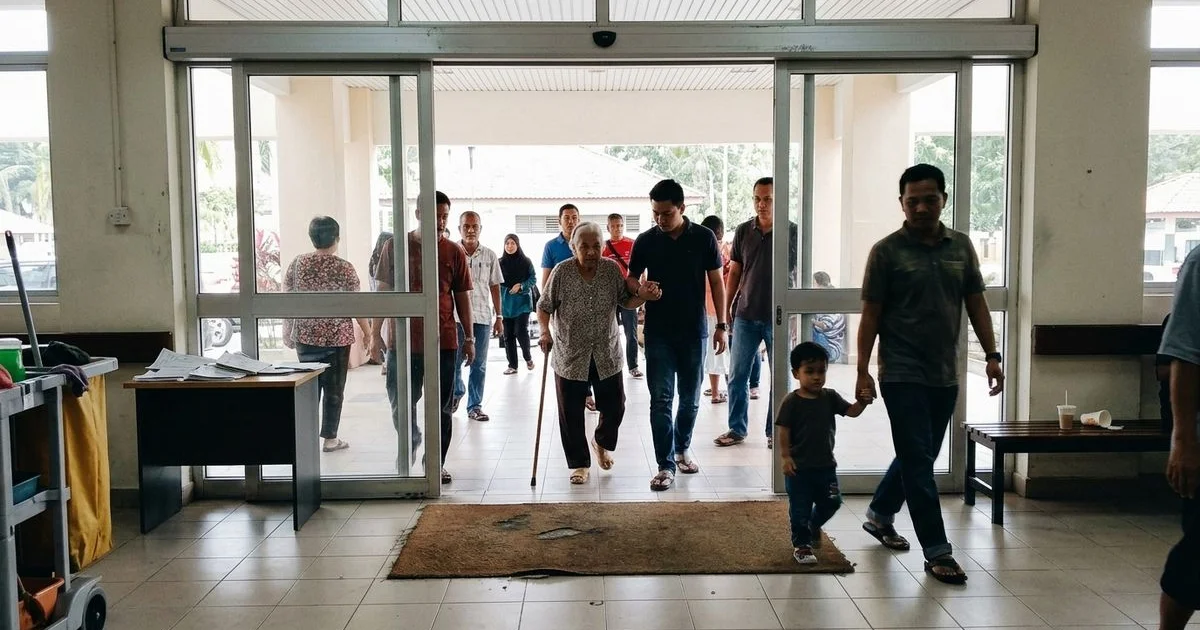
Layer one: the presence sensor. An infrared safety beam watches the threshold and holds the door open while anyone stands in it. Slow walkers, wheelchair users and children get as long as they need. Our guide to safety sensors explains how this differs from the activation sensor.
Layer two: anti-clamp reversal. If something does end up in a closing leaf’s path, the controller senses the resistance spike and stops and reverses instantly. The leaf never builds crushing force against a person — the behaviour at the heart of powered-door safety standards such as EN 16005.
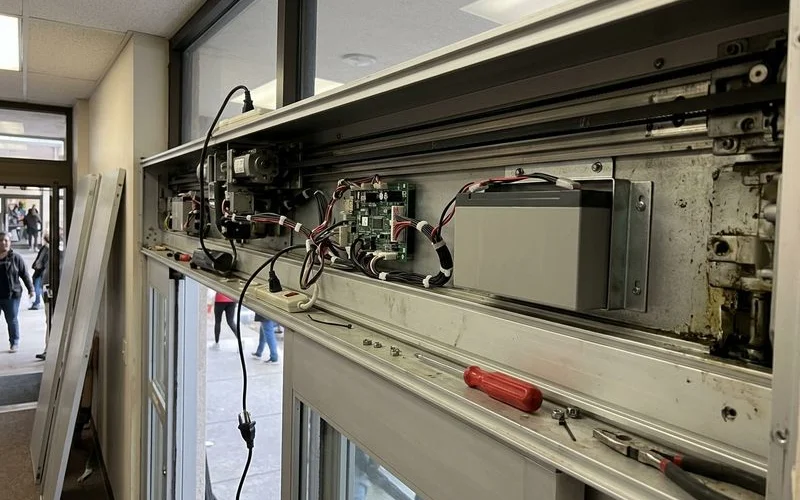
Layer three: backup power. A battery pack in the header takes over when mains power fails, either keeping the door running or driving it to a safe open position. Nobody gets trapped inside a shop or office by a blackout.
Hold-open logic matters too
Well-configured doors use hold-open and delayed-close logic tuned to the site: longer hold times for clinics and elder-care premises, faster cycles for staff corridors. Timing is a safety setting, not just a convenience one.
The Questions Worth Asking Any Supplier
If you are comparing quotations, three questions expose the safety gap between systems quickly:
- Does the door have a dedicated infrared presence sensor, or only a motion sensor?
- What does the anti-clamp function do — reverse, or just stop?
- Is a backup battery included, and what does the door do when power fails?
A supplier who cannot answer all three crisply is quoting you a lesser system. Glass choice matters as well: the leaves themselves should be tempered safety glass, so that even in an extreme event the panel crumbles into blunt granules rather than shards.
Safety also degrades without maintenance. Sensors drift out of alignment, batteries age, and anti-clamp thresholds need periodic verification — which is why our servicing includes a full safety-function test, not just lubrication.
If your entrance serves the public, especially children or elderly visitors, we will gladly walk through the safety package that fits it. The RM50 on-site assessment covers sensor coverage, closing forces and battery condition, and the fee is fully deductible if work proceeds.