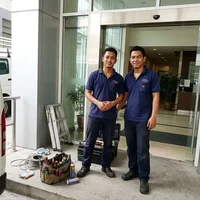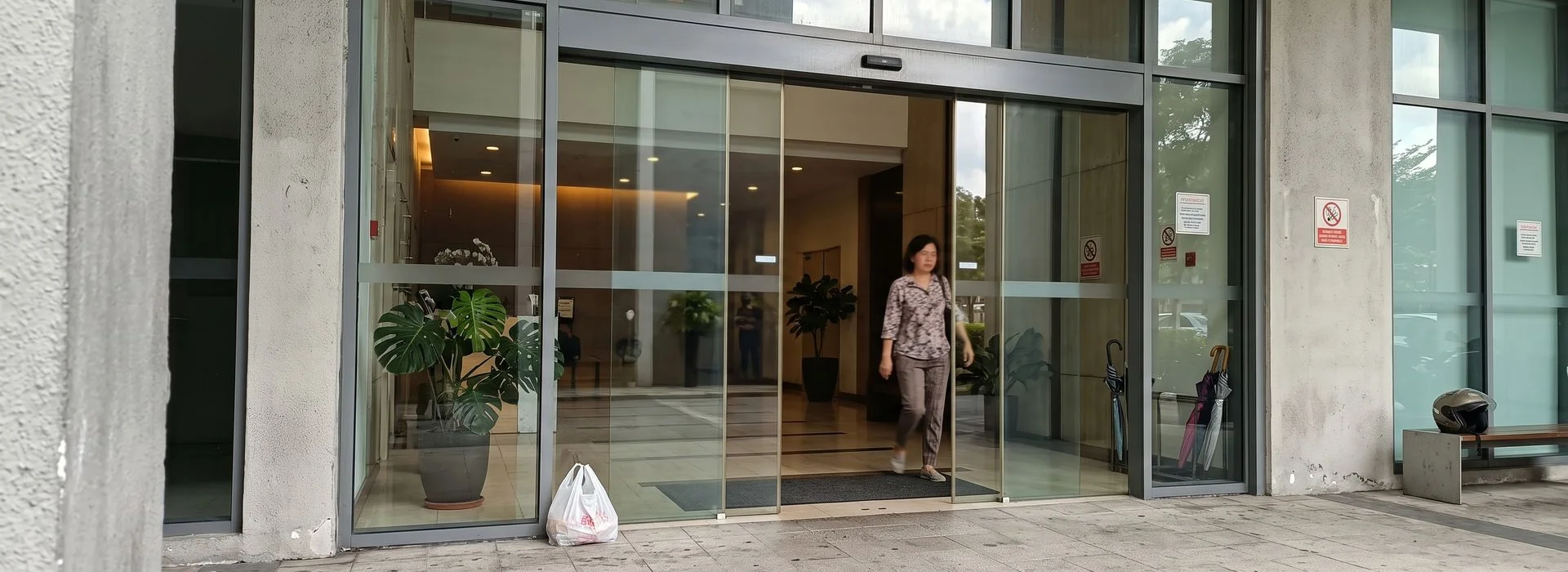
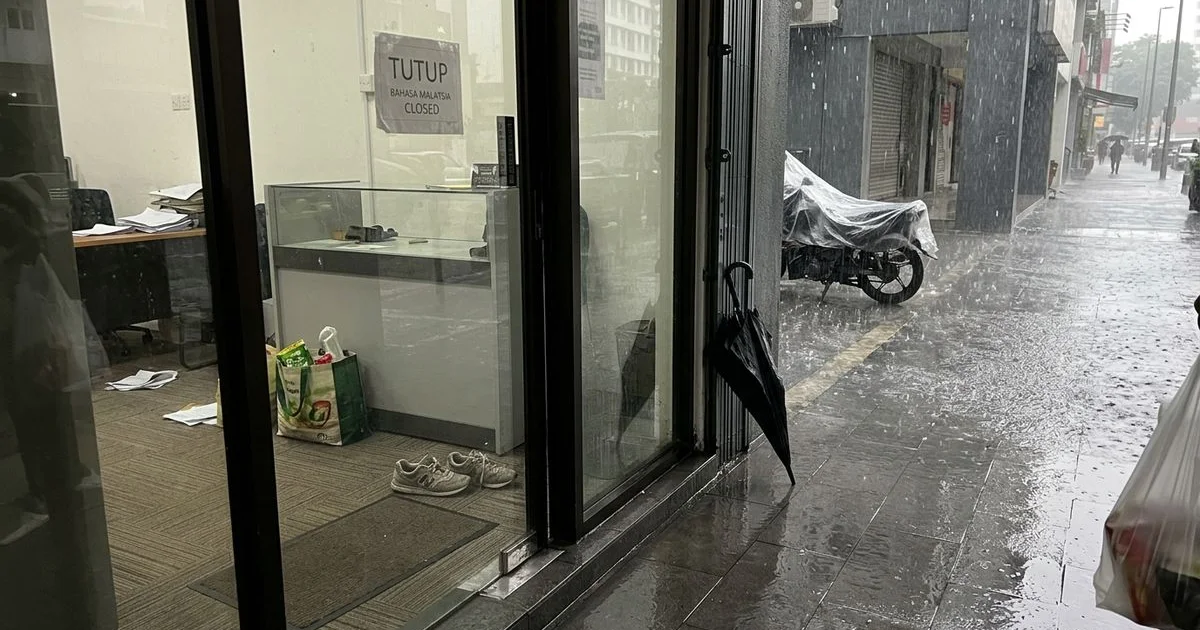
Malaysia’s year-end monsoon does not sneak up on anyone. Every November through January, the same afternoon downpours hammer the same shopfronts — and every year, the same preventable entrance failures follow. Doors that were “a bit sticky” in September jam completely in December, because water, debris and wind find every weakness a dry season hides.
July feels early to talk about it. That is exactly the point. Service slots fill up once the rain starts, and parts that need ordering take time. A pre-monsoon check now costs a fraction of an emergency call-out at the height of the wet season.
What the Monsoon Does to an Entrance
Three failure patterns dominate our rainy-season call-outs.
Water in the track. Ground-level sliding tracks collect rainwater, leaves and grit. The debris grinds into rollers with every cycle, and standing water corrodes bearings from the inside. A door that drags after a storm is usually telling you its track drainage is blocked.
Sensors confused by rain. Heavy rain and wind-blown debris can trigger some motion sensors repeatedly, leaving the door cycling open and shut — or worse, some poorly aimed sensors stop detecting people through the visual noise. Sweep angles and sensitivity need seasonal adjustment on exposed entrances.
Wind-loaded leaves. Monsoon gusts push door leaves sideways in their tracks. On worn rollers this accelerates wear sharply; on swing doors it slams leaves against their closers, straining hydraulics that were already marginal.

The 20-Minute Check You Can Do Yourself
Before calling anyone, walk your entrance with this list:
- Slide or cycle the door and listen — grinding or squealing means roller or belt wear
- Look at the track: standing water, sand or leaf litter means drainage needs clearing
- Check rubber seals along the base and sides for cracks or gaps
- Watch the door close: slamming, drifting or bouncing points to closer or floor spring trouble
- Test the sensor from both directions at walking pace
Anything on that list that fails is worth fixing before the rain arrives, not after.
The RM50 shortcut
Not sure what you are looking at? Our RM50 on-site assessment covers the full mechanical and sensor check, and the fee is deducted if any work proceeds.
What a Professional Pre-Monsoon Service Covers
Our seasonal servicing goes where the visual check cannot: belt tension and motor load on automatic doors, roller bearing condition, track alignment, sensor calibration, backup battery health, and the hydraulic state of closers and floor springs.
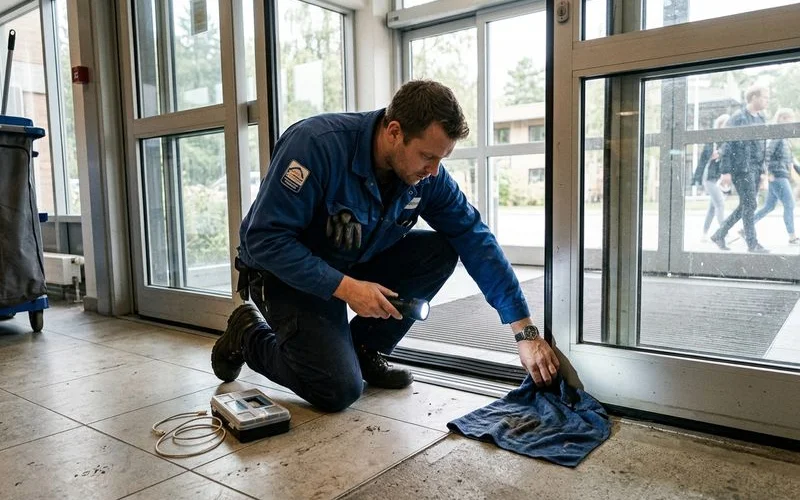
For glass entrances we also inspect the panels and fittings. Tempered glass itself shrugs off monsoon weather — it is up to five times stronger than annealed glass — but the hardware around it needs attention. Loose patch fittings and tired gaskets are how wind-driven rain gets past a perfectly good panel.
| Check | Why before the monsoon |
|---|---|
| Track drainage | Standing water corrodes rollers and bearings |
| Sensor calibration | Rain and debris cause false triggers or missed detection |
| Door seals | Worn gaskets let wind-driven rain indoors |
| Floor springs | Wind-slammed doors destroy weak hydraulics fast |
Book Early, Stay Dry
Every year our December schedule fills with emergency repairs that a September service would have prevented. If your entrance is showing any early symptoms — or has simply not been serviced in the past 12 months — this is the season to sort it.
Get ahead of the rain — Book a door service or repair