
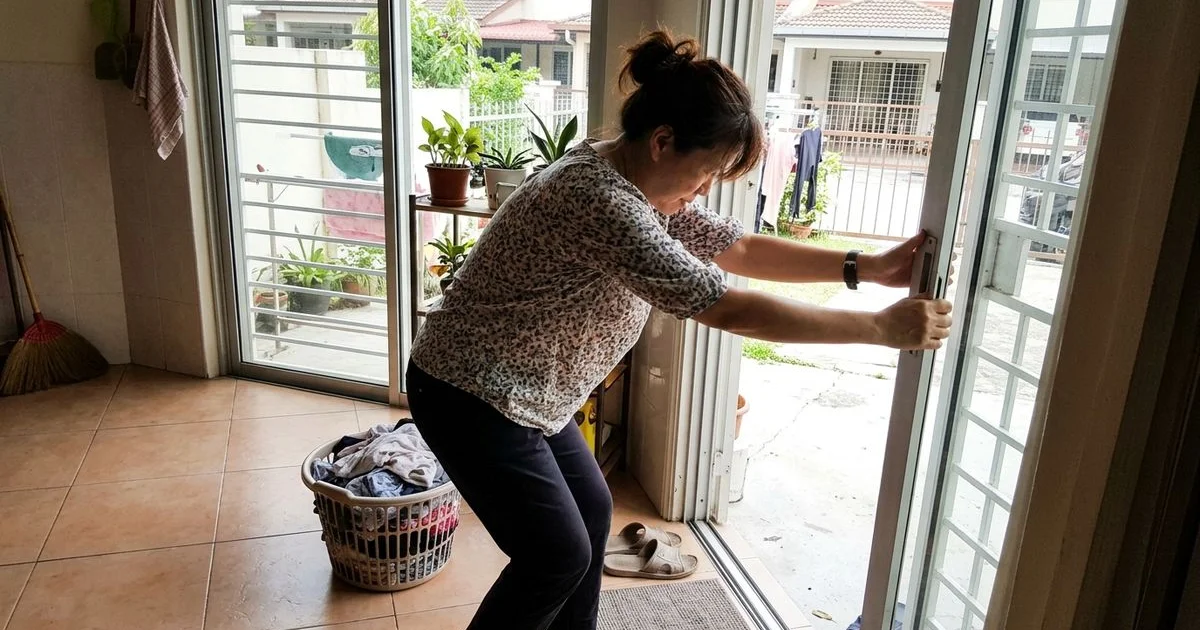
The Door Tells You Early — If You Listen
Rollers rarely fail overnight. They fade over months, and the door reports every stage of it. Catching the signs early is the difference between a quick roller and track replacement and a repair list that has grown to include the track, the frame alignment and — on automatic doors — a strained motor.
Sign one: effort. A healthy sliding door moves with two fingers. When it starts wanting a whole hand, then a shoulder, the roller bearings are stiffening and flattening.
Sign two: jumping. A door that lifts, skips or derails as it travels has rollers so worn the leaf is no longer held square on its track.
Sign three: noise. Grinding, scraping or rumbling is the sound of dragging metal — flattened wheels sliding instead of rolling, or grit being crushed in the track.
Sign four: visible wear. Slide the door open and look at the exposed track: shiny gouged lines, metal dust or a leaf sitting visibly lower at one end all confirm what the other signs suggested.
Why Rollers Wear Out
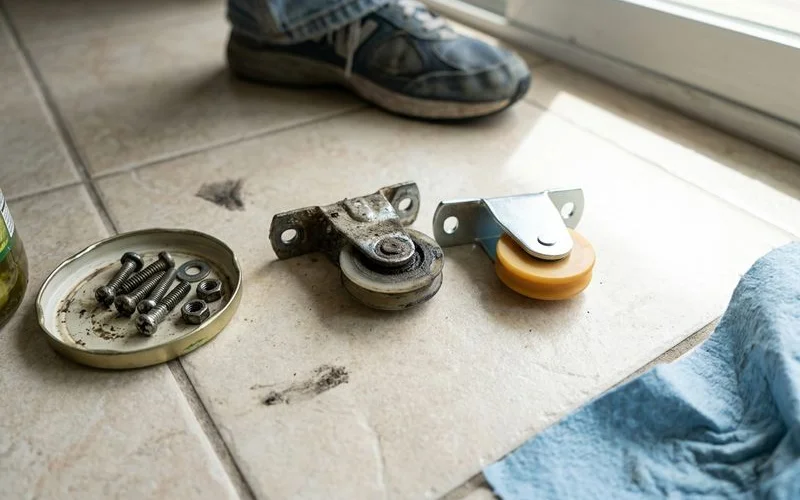
Every roller carries a share of the door’s full weight on a small bearing, through thousands of cycles, in Malaysian humidity. Grit in the track acts as grinding paste; moisture finds the bearing; and on heavy tempered-glass doors the loads are relentless. Cheap rollers with plastic wheels and unsealed bearings simply give up sooner.
The wear is also self-accelerating: a flattening roller drops the leaf, the leaf drags the track, the dragging chews both — which is why a door that “just got heavy recently” deserves attention now. If your leaf is already scraping the floor, that stage is covered in our guide on dragging doors.
The two-finger test
Once a month, slide the door with two fingers. Smooth and light: healthy. Sticky, gritty or heavy: the rollers are talking. It is the cheapest inspection routine any sliding door gets.
DIY or Call It In?
Honest guidance: light aluminium doors with standard rollers are a reasonable DIY job for someone comfortable lifting a leaf off its track. Heavy glass sliders are not — the panels are genuinely hazardous to handle, and mismatched rollers fail fast. Older and non-standard doors add a sourcing problem, which is exactly where our custom roller fabrication earns its keep: we measure the housing and wheel profile and make a match.
Replacement is quick and modest in cost against a new door. WhatsApp us a photo of the roller (or just the sticking door) with your location, and we will handle homes, shoplots and offices across the Klang Valley with fast turnaround.